(By Captain G. A. L. C. Talbot – Adjutant, 14th/20th King’s Hussars 1941 – 1944)
On 3rd September 1939, the Regiment was stationed at Secunderabad, moving to Meerut in October.
In January 1940, Lieut.-Colonel L. H. S. Groves took over command of the Regiment from Lieut.-Colonel A. V. Pope.
As we had only started being mechanised at the end of 1938, very great emphasis was laid on tank training between the time of our arrival in Meerut and when the regiment was mobilised in May 1941.
In February 1941 the Regiment provided the nucleus around which were formed the 26th Hussars. This nucleus consisted of the Commanding Officer (Major J. B. Norton), eight officers and 102 N.C.Os. and tradesmen; the deficit being made good by the arrival of 200 men of absolutely first-class material from England just before our mobilisation.
On 24th June the Regiment sailed from Bombay for Basra, where we arrived on 3rd July, forming part of the 2nd Indian Armoured Brigade. This formation was commanded by Brigadier J. A. Aizlewood, M.C., with Colonel J. Pocock as his Second-in-Command. The remainder of the Brigade consisted of Brigade Headquarters, 15th Field Regiment, R.A., and the 32nd Field Squadron, Sappers and Miners.
After ten days’ hard work at Basra, in an average shade temperature of 120 degrees, the Regiment moved by rail and road to Baghdad. During this trip the Colonel and the Adjutant, Capt. R. J. W. McAllen, collapsed with heat-stroke, as a result of which the latter died on 20th July.
From Baghdad we moved to Kirkuk and from there to Khaniquin. The invasion of Persia was now imminent and squadrons set about putting the final polish on their training.
About 15th August the 9th Armoured Brigade, consisting of the Household Cavalry and the Warwickshire and Wiltshire Yeomanry, arrived from Syria. We were very glad indeed to meet some old members of the 14th/20th Hussars here, serving with the Yeomanry regiments.
Before the invasion the British forces were divided into two columns. “The Main Body,” under the command of Brigadier Aizlewood, was composed of the Regiment less “C” Squadron and a detachment of the Reconnaissance Troop, a battalion of Gurkhas, the 15th Field Regiment less one battery, and a battery of Medium Artillery. The other column, known as “Pocol,” was under the command of Colonel Pocock and consisted of “C” Squadron, a detachment of the Reconnaissance Troop, a portion of the 9th Armoured Brigade, and one battery of the 15th Field Regiment.
The Main Body crossed the Persian frontier early in the morning of 25th August and arrived at Qasr-i-Shirin at first light. As this was only lightly held the advance continued up to the Pai-Tak Pass.
About a third of the way up this pass the Reconnaissance Troop came under very heavy fire and it was not long before the Brigadier decided to switch his force on to the axis taken by Pocol. Meantime, Pocol had crossed the Persian frontier due east of Khaniquin, some miles south o f of Qasr-i-Shirin, and, turning south-east, had made for Gilan. Heavy opposition was met here along the road to Shahabad.
It was during the fighting of that afternoon that Major P. F. W. Browne gained an immediate award of the M.C. That night the Persians vacated their positions, and the complete force continued the advance on the morning of the 26th. A blown bridge delayed matters during the night of the 26th/27th. However, it was repaired by the morning of the 27th and the advance was resumed, the Regiment arriving at Shahabad that evening. Here we learned that the main Persian position was some five miles east of the town.
Efforts were made, on the morning of the 28th, to make them disclose these positions, but without success, and it was just before “B” Squadron, under Major C. F. Johnston, were about to launch an attack that, quite inexplicably, the Persians raised the white flag, thereby ending the Regiment’s third invasion of Persia.
After a Victory March through Kermanshah the Regiment was moved immediately over the Shah Pass to Hamadan, where we received a great welcome. It is worth recording that only six of the Regiment’s tanks failed to arrive after a march of 350 miles in six days over very indifferent roads – and one of these tanks was knocked out.
On the same day as we left Kermanshah for Hamadan a party from the Brigade, including Major R. J. Stephen, went forward to make what must have been the first contact during the war between the Allies and the Russians.
On 23rd October the Regiment left Hamadan for Quayara, a stretch of desert on the Tigris, about forty miles south of Mosul. The winter here was as unpleasant as the summer, but for different reasons. It was extremely wet, the mud was deep and it was intensely cold, it being necessary one day to use a blow lamp on the tracks of a tank to thaw it out of the ground.
In March 1942, the Regiment moved to Mosul and from there in June to Bisitun, where we were in camp under the Bisitun Rock and had a good opportunity to admire the carvings of Darius. Whilst here the 31st Indian Armoured Divisional Headquarters came out from India and this division began to take shape. It was commanded by Major-General R. H. Wordsworth and consisted of the 252nd Indian Armoured Brigade (late 2nd Indian Armoured Brigade) and the 3rd Motor Brigade, later to be relieved by the 43rd Gurkha Brigade.
The time in Bisitun was spent in training on the slightly more modern tanks with which the Regiment was being equipped. In November we returned to Basra, where we received further drafts from India and England.
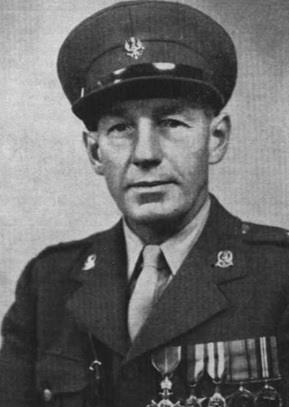
Lieut.-Colonel L. H. S. Groves’s three-year tenure of command terminated on 12th January 1943 and following his leaving the Regiment for England in February, Major H. A. R. Tilney was appointed to command in the absence of Lieut.- Colonel J. B. Norton, who now became the Lieutenant Colonel of the Regiment.
The strength of the Regiment was now just on 900 all ranks, as “Python” was due to claim 150 during the year, including most of our Regular service key-men. It spoke volumes for the quality of our war-time service soldiers that they not only replaced the former like real professionals, but even raised the existing very high standard throughout the Regiment.
In May the Regiment returned for the summer to Quayara, where we underwent intensive training in co-operation with the Gurkha Brigade.
In October we left Quayara for the Middle East, travelling through Tikrit, Baghdad, Palestine and the Sinai Desert, eventually arriving at Burg el Arab, near Alexandria. This was the first time since leaving India that the Regiment had been near civilization, and we proceeded to make up for lost time.
At Alexandria we were completely re-equipped and embarked on further training, which embraced practically every method of tank employment. In March 1944, we moved to Qatana, near Damascus in Syria. Whilst up there we did further tank and infantry training with the 46th and 5th Infantry Divisions.
We also had a false alarm concerning our long hoped for further employment on active service. This consisted of a forced march of some 700 miles to Alexandria, which turned out to be only to assist in the quelling of a local disturbance. Towards the end of this year news came that the Regiment was to be sent to Italy in exchange for the 3rd Hussars.
On the morning of 25th December an extremely cheery advance party went off under the command of Major E. B. Studd. The remainder of the Regiment followed on 15th January, arriving at Taranto, South Italy on 21st January 1945.
The departure of the Regiment from the Middle and Near East ends this comparison of the movements of the 14th (King’s) Hussars and the 14th/20th Hussars during the last two wars. However, one thing more must be mentioned. For the final offensive in Italy, we became an integral part of the 43rd Gurkha Brigade, commanded by Brigadier H. R. Barker, D.S.O., O.B.E., M.C., our very good friend of 31st Indian Armoured Division days. I hope that our exploits with them may form the subject of an article at a later date.
Copied from the 1948 Hawk Journal.
 History of the 14th/20th King's Hussars