The 16th April 2024 marked 79 years since the Battle of Medicina, which formed part of the Allies’ Italian Campaign during the Second World War. Medicina is an extremely important date for the 14th/20th King’s Hussars, as it was part of their only expedition onto the European front of the war, having spent the majority of their time in India and the Middle East. It also allowed for the regiment to form a long-lasting friendship with the 2nd/6th Gurkha Rifles, as well as a bond with the city of Medicina (much aided through the efforts of the last Medicina survivor, Sgt K. Dowding. The photographs in this post come from his belongings, gifted to the King’s Royal Hussars museum following his passing in 2019).
Battle of Medicina, 16th April 1945
The Axis’ surrender of Tunisia on 13th May 1943 saw the end of the war in North Africa. Mussolini’s imperial ambitions for the reinstatement of the Roman Empire had been foiled, and Italy was left in a precarious position. Churchill, due to much insistence from Stalin, had managed to persuade the Americans into launching an attack on Europe’s ‘soft underbelly’.
This targeted the weakest point of Nazi occupied Europe, rather than invading through France as the Allies lacked the supplies and manpower to do so. Creating a second front of the war would also relieve the Red Army, taking German forces away to man the defence of occupied territories in Italy.
By 10th July 1943, the allies had landed in Sicily. The 3rd September saw the first troops landing on the Italian mainland, with the Italian surrender coming just five days later. Mussolini had been arrested under orders from King Victor Emmanuel III, and the Kingdom of Italy officially joined the Allied forces, declaring war against Germany on 13th October 1943.
Upon the outbreak of war, the 14th/20th King’s Hussars were stationed in India. For most of the war they remained in the Middle East, guarding Iraqi oil fields and Russian supply routes. Many senior officers blamed the ‘Monty Curse’, stemming from some supposedly unpleasant run-ins with Field Marshal Bernard Law Montgomery whilst stationed near Cairo in the1930s.
To quote Nigel Hamilton (Monty – The Making of a General): “he thought the cavalry were a nonsense, not serious soldiers, just there for hunting, Polo and fishing, and he told them so…”. With the instigation of the Italian Campaign in 1944 the 14th/20th King’s Hussars sailed to Italy to supply further troops, with the regiment’s main body reaching Taranto on 21st January 1945.
The regiment was split up: C Sqn moving to Fontanelice, B Sqn going 60 miles north of Florence to join the 78th Infantry Division, and A Sqn remaining with the remainder of the Regiment & RHQ to set up a regimental tactical HQ in Castel del Rio.
‘The Hawk’ (1947 ed.) records d ‘B Squadrons role was almost that of an artillery battery’, ‘C Squadron… were not allowed to fire’ having to ‘act as an unpleasant surprise should the Germans advance’. By March 1945, the Regiment withdrew to Cesena and ‘a‘ sqn converted to Kangaroos. They also transferred to the 43rd Gurkha Lorried Infantry Bde (43GLI), who had been in Italy since 1943.
The 2nd/6th Gurkha Rifles converted to ride in A Sqn’s Kangaroos. The 14th/20th King’s Hussars also provided the tanks that supported the Gurkhas. Friendships blossomed between the two regiments, and a close bond remains today.
The Allies’ final offensive in Italy began 9th April 1945. The 43GLI was to forge ahead and establish various river crossings, allowing for the II Polish Corps to pass over and maintain the northern advance. This terrain was littered with natural obstacles, aiding the Germans in constructing a well-fortified defence.
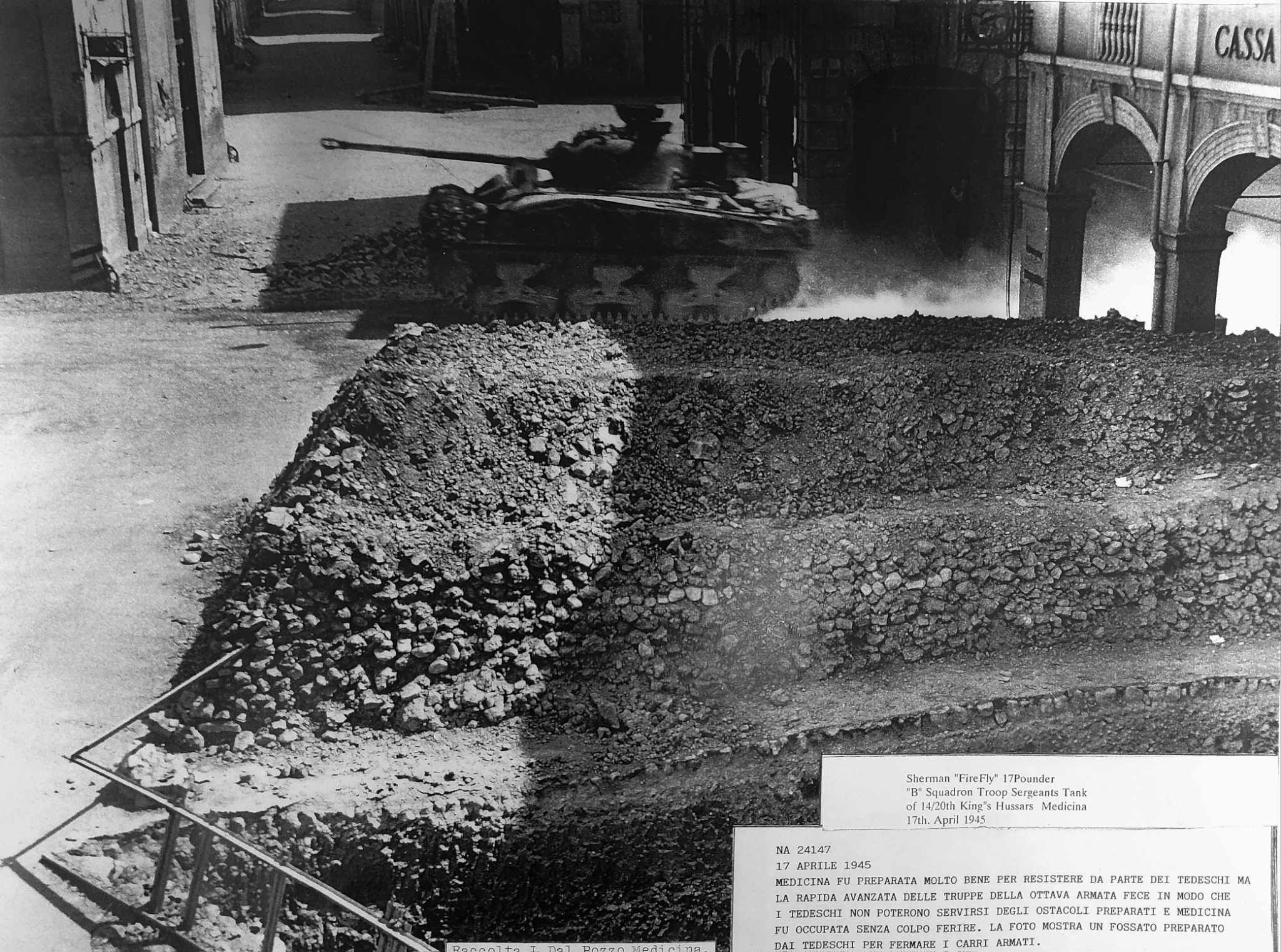
The 13th April 1945 saw the crossing of the river Santerno. By 14th April they had reached the river Sillaro, but there was the threat of a counterattack from Medicina. The Corps commander ordered Brigadier ‘Tochi’ Barker of the 43GLI to push up the road and take Speranza, Marochia, and Medicina.
If the Germans didn’t flee or surrender, they would be forced to give battle. The 2nd/10th GR attempted to cross the Sillaro on 15th April, under heavy fire from the German forces. They were initially successful in their crossing, but they couldn’t hold the bridgehead on the north bank, and so were forced to withdraw.
In the early hours of 16th April a second crossing attempt was made. The bridgehead was held long enough for a bridge to be laid, and at 7am the 2/8 GR crossed with the 2RTR tanks, advancing towards Formasaccia.
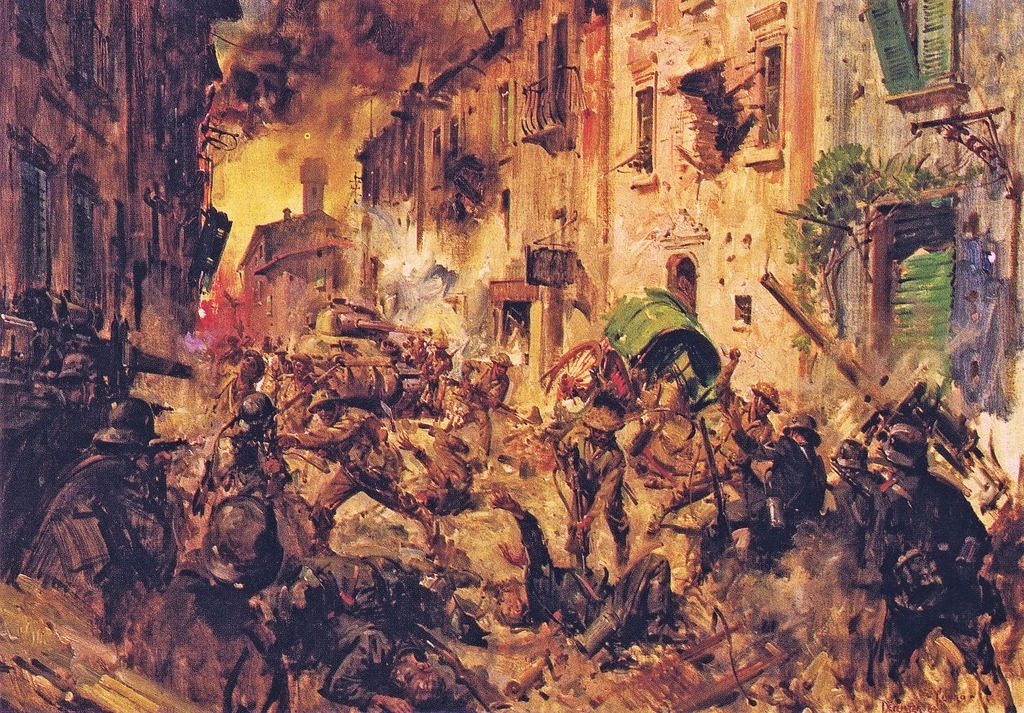
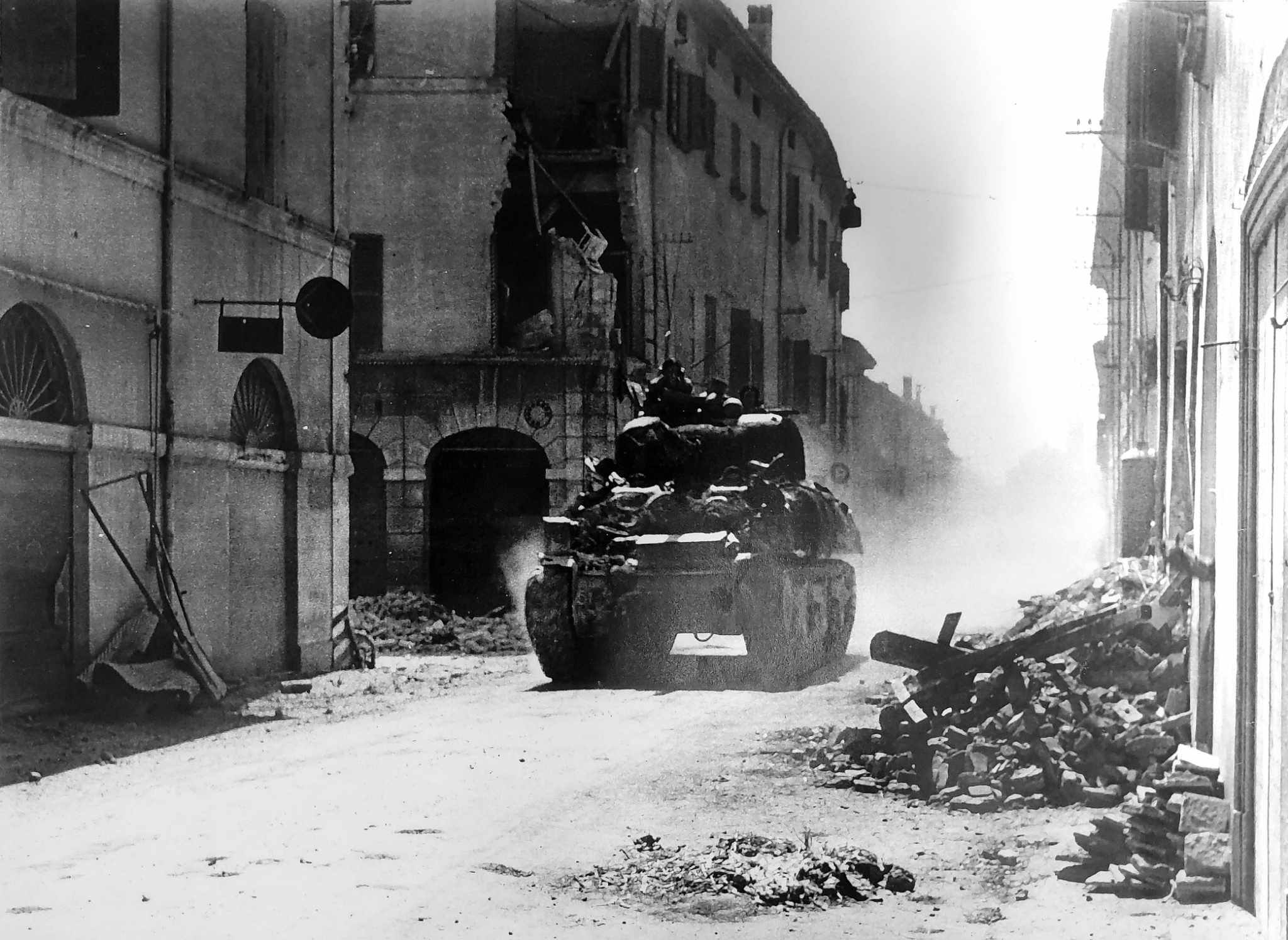
Lt. Col Tilney, commanding the 14th/20th King’s Hussars was ordered to cross the Sillaro and advance to Medicina. This began at 9:45am: an RTR Sqn crossed first, forming a protective shoulder for C Sqn. A Sqn’s Kangaroos carried a platoon of 2/6GR, and the remaining Kangaroos were escorted by B Sqn, forming the main advancing body. C Sqn’s 1st Troop was held up by self-propelled Guns just outside of Madonna del Silvaro, and so 2nd Troop took over the advance. The tank units fought against the Germans for many hours, until their eventual surrender. By 18:15, the 14th/20th King’s Hussars vanguard reached the outskirts of Medicina.
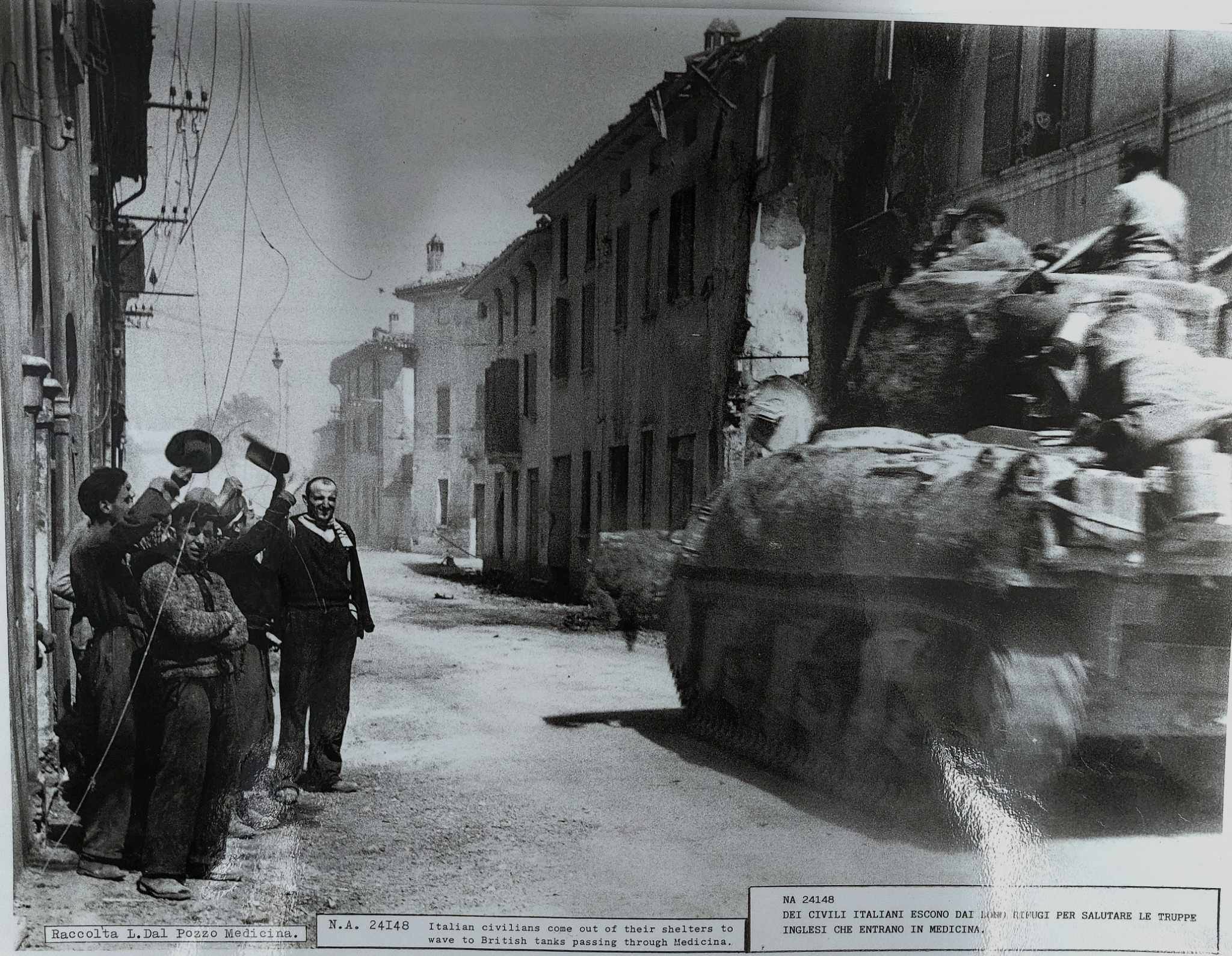
The 2/6GR had arrived an hour earlier and were already attacking into the town. Brigadier Barker informed ‘Freckles’ Tilney that the enemy resistance was faltering, and so C Sqn, with support from A Sqn on the left flank, were ordered to attack immediately. The Gurkhas pushed forward into the many buildings in Medicina, fighting hand-to-hand with bayonets and kukri. C Sqn’s tanks backed them up, pushing further into the town. The streets were too narrow to allow for the entire 14th/20th King’s Hussars to fight: B Sqn escorted A Sqn’s remaining Kangaroos so that the Gurkhas could dismount and enter the fight. With B Sqn covering the majority of the exits, the infantry could mop up. Medicina was deemed secure by 21:00.
 History of the 14th/20th King's Hussars